
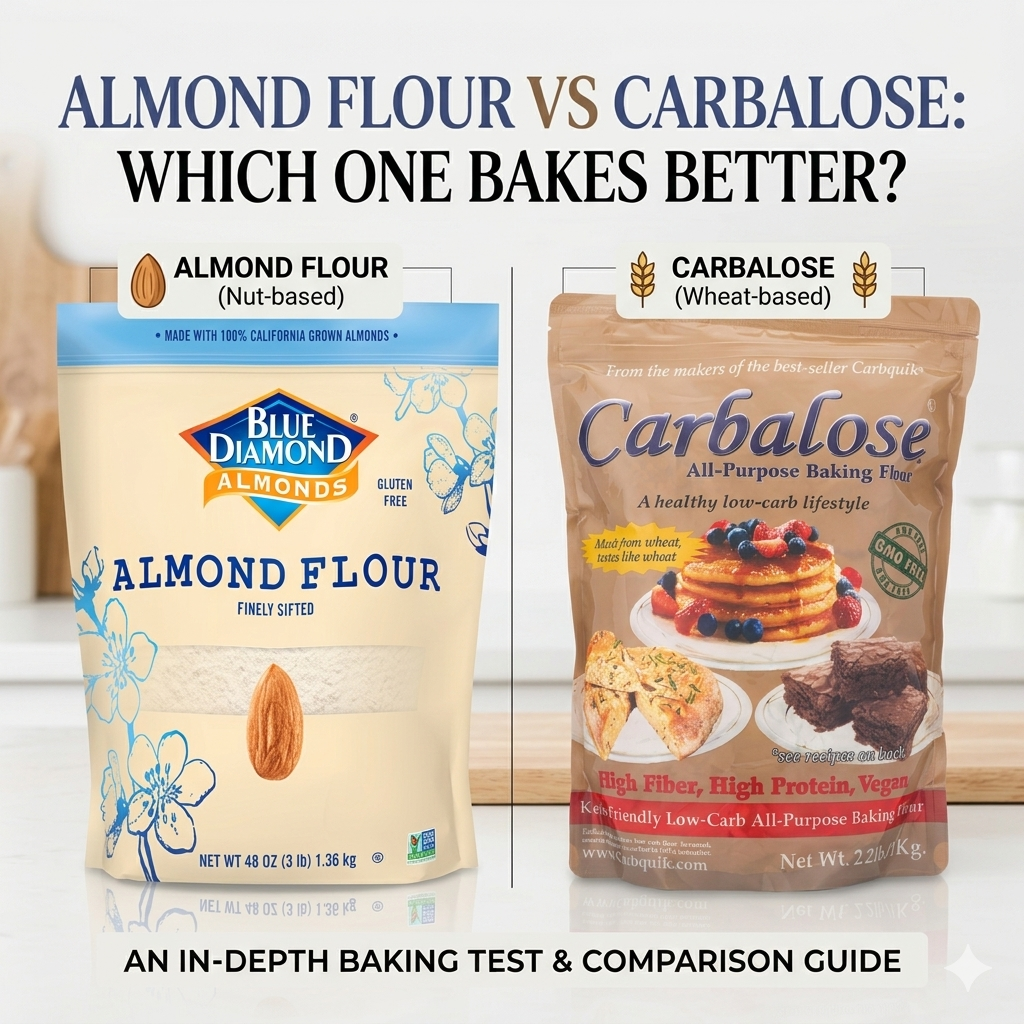

Two of the most common low-carb baking ingredients are Carbalose flour and almond flour.
Both are widely used in keto recipes—but they behave very differently in baking.
Carbalose is just one of many low-carb flour alternatives available today.
But when compared to almond flour, the differences become very clear.
Understanding how each one works will help you choose the right ingredient for your recipe—and avoid the texture problems that frustrate most low-carb bakers.
What Is Carbalose Flour?
Carbalose flour is a low-carb flour alternative designed to mimic the behavior of traditional wheat flour.
Unlike nut-based flours, Carbalose is made from a blend of wheat proteins and fibers that replicate the structure of regular flour.
This structure allows it to:
- form elastic dough
- trap air during baking
- support yeast fermentation
Because of this, many low-carb bakers rely on Carbalose flour when making:
- sandwich bread
- pizza crust
- dinner rolls
It produces a more traditional crumb and chew compared to most low-carb options.
⚠️ Important Note:
Carbalose is not gluten-free.
Since it contains wheat-based components, it is not suitable for gluten-free diets.

What Is Almond Flour?
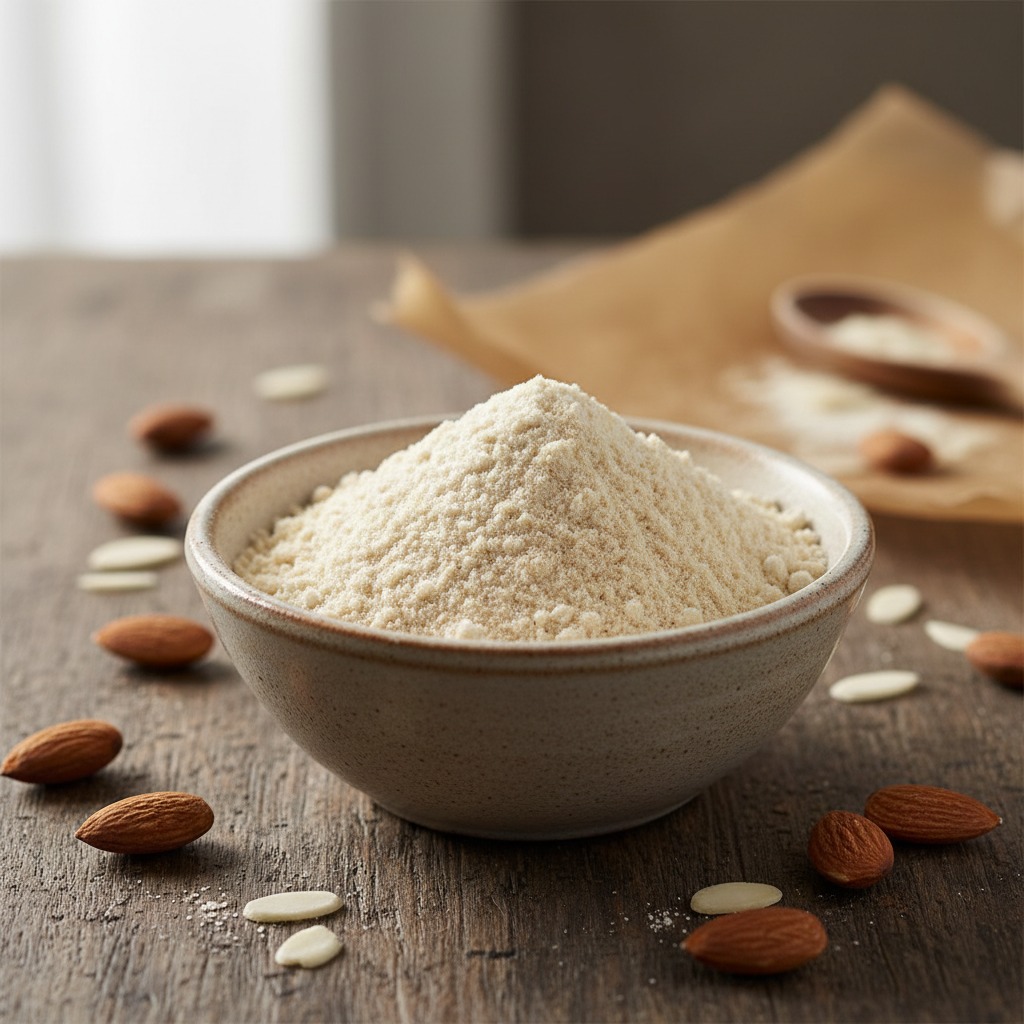
Almond flour is made from finely ground blanched almonds.
It’s naturally low in carbohydrates and widely used in both keto and gluten-free baking.
Unlike Carbalose, almond flour does not contain gluten or structural proteins.
This means it behaves very differently in recipes.
Products like almond flour are best suited for:
- cookies
- muffins
- cakes
- quick breads
Almond flour creates a soft, moist texture—but it does not form dough or support yeast-based recipes.
Texture Differences
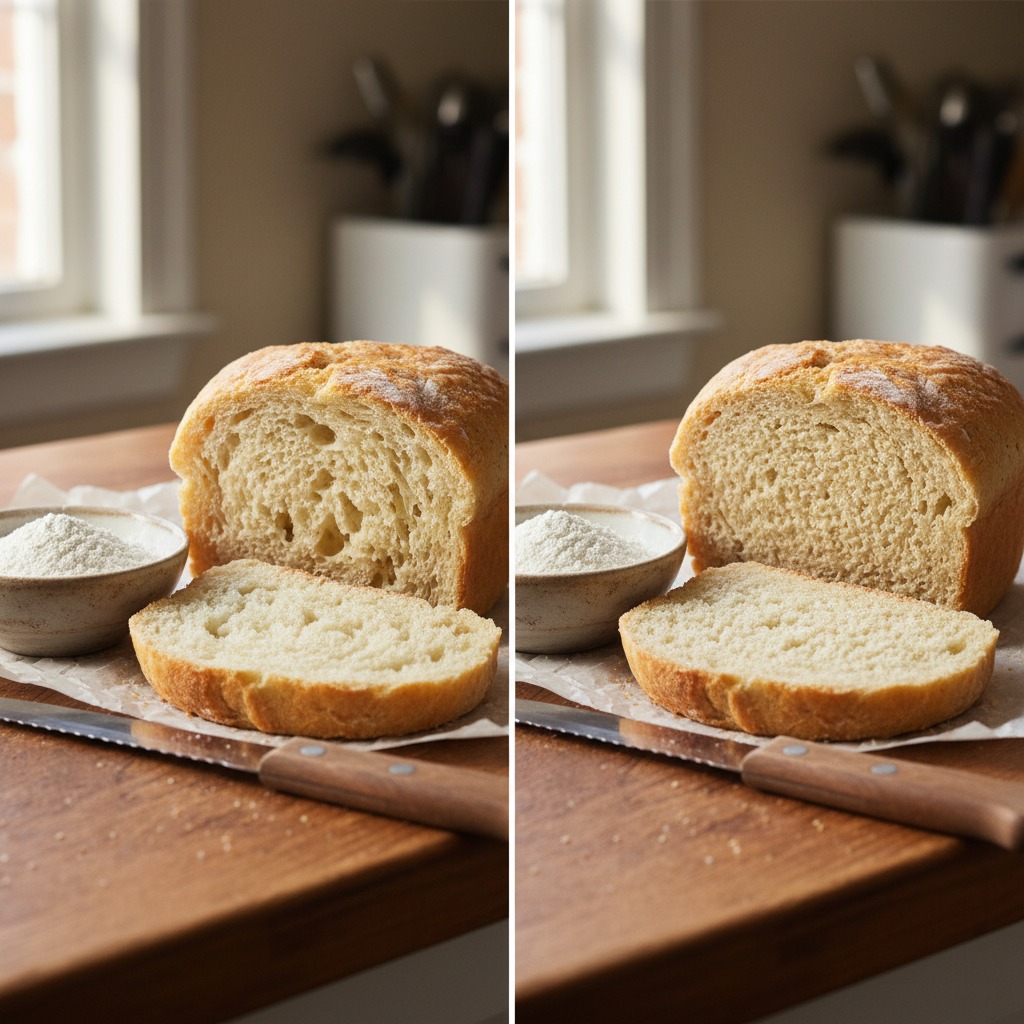
The biggest difference between Carbalose and almond flour is structure.
Carbalose behaves more like traditional wheat flour, producing:
- elastic dough
- a chewy crumb
- better rise
Almond flour behaves more like a soft base, producing:
- softer baked goods
- heavier texture
- more cake-like results
This is why almond flour bread recipes often turn out dense, while Carbalose-based doughs can rise and hold shape.
Neither flour is better—they simply serve different purposes.
Carb & Nutrition Comparison
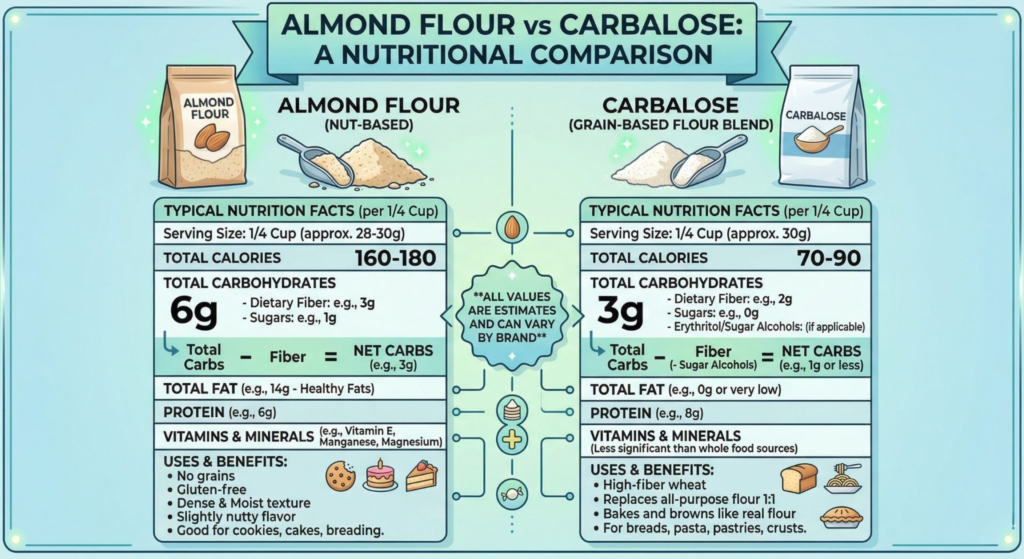
Both flours are considered low-carb, but their nutritional profiles are very different.
Carbalose flour:
- Lower net carbs than traditional flour
- Higher in protein
- Contains added fiber
- Designed for structure and elasticity
Almond flour:
- Naturally low in carbs
- High in fat
- Moderate protein
- Adds moisture and richness
Because almond flour is higher in fat, it tends to produce denser, more filling baked goods.
Carbalose, with its protein and fiber structure, produces lighter, more bread-like textures.
📌 Important:
Net carb counts vary by brand and recipe.
Focusing only on carb numbers can be misleading—texture and function matter just as much.
When to Use Each Flour
Choosing the right flour becomes much easier when you think in terms of function.
Use Carbalose for structure:
- sandwich bread
- pizza crust
- rolls
Use almond flour for tenderness:
- cookies
- muffins
- cakes
Trying to substitute one for the other usually leads to disappointing results.
This is why most experienced low-carb bakers keep both ingredients in their pantry.
Each one solves a different problem.
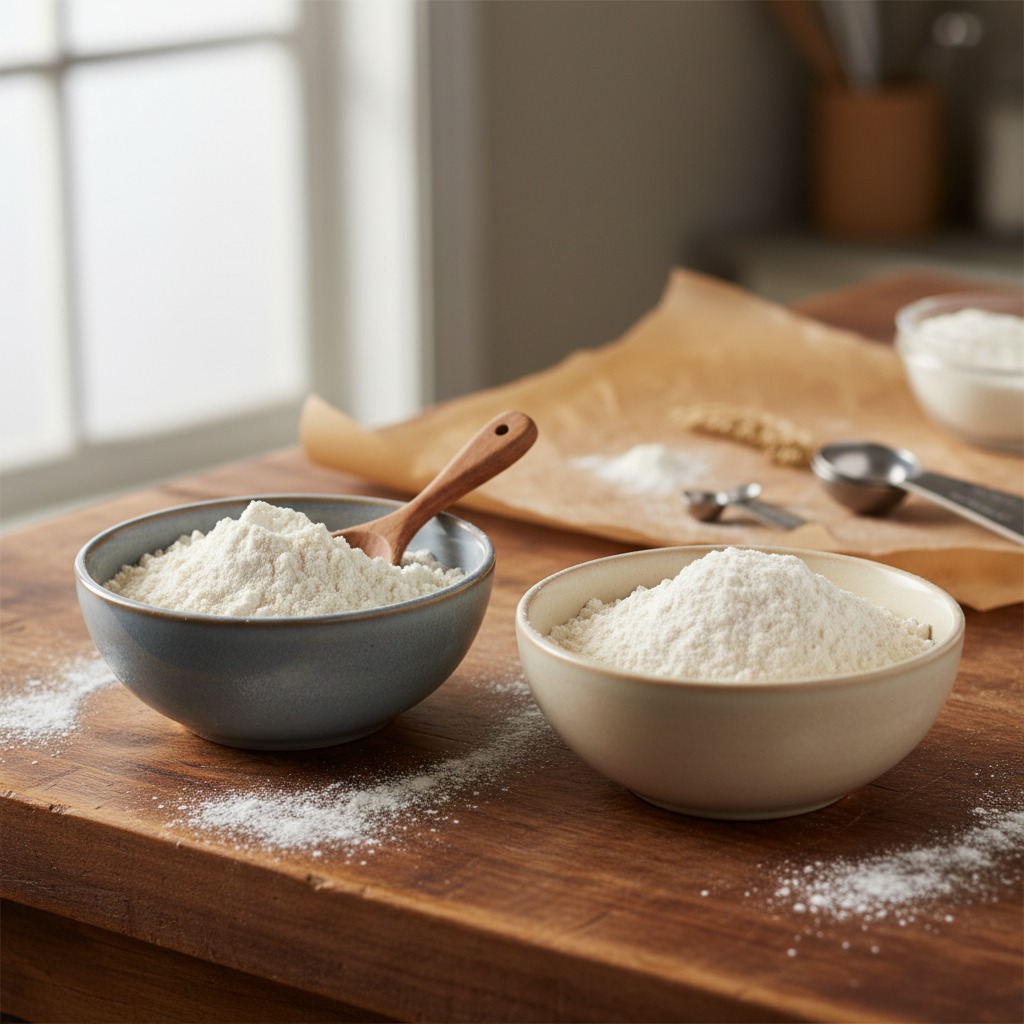
Helpful Baking Tools (Consistency Matters)
Low-carb baking is less forgiving than traditional baking.
Small measurement differences can completely change the outcome of a recipe.
Using a digital kitchen scale is one of the simplest ways to improve consistency.
It allows you to:
avoid texture issues caused by imprecise ratios
measure ingredients accurately
repeat successful recipes

Watch the Video Version
This article accompanies the Smart Swap Kitchen video:
Carbalose vs Almond Flour: Which One Actually Bakes Better?
In the video we compare dough texture, baking performance, and finished results.